
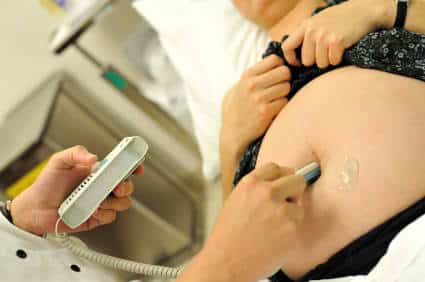
Are At-Home Fetal Dopplers Safe? What the FDA and Doctors Say
Short answer: health authorities advise against using a fetal doppler (a "baby heartbeat monitor") at home. The U.S. FDA says over-the-counter fetal heartbeat monitors should only be used by trained health care providers when medically necessary, and the UK's NHS tells parents not to use a home doppler to check the baby's heartbeat. Hearing a heartbeat doesn't mean your baby is well, and it can delay the call that matters. If your baby is moving less than usual, contact your midwife, ob-gyn or maternity unit right away.
This article is for information only and isn't medical advice. Talk to your pediatrician or doctor.
Why this page changed
This page used to list "best fetal dopplers". We've replaced that list: we no longer recommend buying a home doppler, because the official guidance below advises against it. We don't link to any doppler products.
What the experts say
| Source | What it says about home dopplers |
|---|---|
| U.S. FDA | Over-the-counter fetal heartbeat monitors (also called doptones) "should only be used by trained health care providers when medically necessary". Use by untrained people "could expose the fetus to prolonged and unsafe energy levels". (FDA, Ultrasound Imaging) |
| NHS (UK) | "Do not use a home doppler (heartbeat listening kit) to try to check the baby's heartbeat yourself. Even if you hear a heartbeat, this does not mean your baby is well." (NHS, Your baby's movements) |
| ACOG (ob-gyns) | If you feel less movement than usual, ask your ob-gyn about kick counts, and call if you haven't felt 10 movements within 2 hours. (ACOG) |
The two problems with home dopplers
1. False reassurance
The biggest risk isn't the device itself but what parents do with the result. A heartbeat on a home doppler can make you feel the baby is fine when something is wrong, so you wait instead of getting checked. The NHS is clear: a heartbeat you hear at home does not mean your baby is well. Changes in your baby's movements are the warning sign to act on, not a home heartbeat reading.
2. Ultrasound energy without training
Dopplers use ultrasound. The FDA warns that untrained users could expose the fetus to prolonged and unsafe energy levels, which is why it says these devices belong in trained hands and only when medically necessary.
What to do instead
| Situation | What to do |
|---|---|
| Your baby is moving less than usual, or the pattern changes | Call your midwife, ob-gyn or maternity unit right away. The NHS says not to wait until the next day, even if it's the middle of the night. |
| You can't feel your baby move | Call right away. Don't try to check with a home doppler first. |
| Your provider suggested kick counts | Time how long it takes to feel 10 movements, ideally after your biggest meal. Call your ob-gyn if you haven't felt 10 within 2 hours (ACOG). |
| You'd love to hear the heartbeat | Your provider checks it at prenatal visits. Ask if you can record the sound or take an image during a medically needed exam: the FDA calls keepsake images "reasonable if they are produced during a medically-indicated exam". |
| You feel anxious between visits | Tell your provider. Ask what to watch for and who to call after hours, and keep that number handy. |
Getting to know your baby's movements
- When movement starts: the NHS says most people feel their baby move between 16 and 24 weeks; first-time parents often notice it later, after about 20 weeks. ACOG notes that most first-time moms feel kicks at about 5 months.
- Kick counting: advice differs. The NHS says you don't need to count kicks and should learn your baby's usual pattern instead. ACOG suggests asking your ob-gyn whether kick counts are right for you. Either way, a change from your baby's normal pattern is the reason to call.
- Trust your instinct: if something feels wrong, get checked. Calling is never a bother.
More on the stages of pregnancy: our week-by-week pregnancy guide, late pregnancy symptoms, ultrasound vs sonogram and preeclampsia: what expecting mothers need to know.
Fetal doppler FAQ
Are at-home fetal dopplers safe?
Health authorities advise against them. The FDA says over-the-counter fetal heartbeat monitors should only be used by trained health care providers when medically necessary, and the NHS says not to use a home doppler to check your baby's heartbeat. The main danger is false reassurance that delays care.
Can a home doppler tell me my baby is OK?
No. The NHS says that even if you hear a heartbeat, it does not mean your baby is well. If your baby's movements change or slow down, contact your midwife or ob-gyn right away instead of checking at home.
What should I do if my baby is moving less?
Call your midwife, ob-gyn or maternity unit immediately. Don't wait until the next day, even at night, and don't try to reassure yourself with a home doppler first.
How many kicks should I feel?
There's no single number for everyone. The NHS recommends learning your baby's usual pattern rather than counting. ACOG suggests asking your ob-gyn about kick counts; if you've been told to count, call if you haven't felt 10 movements within 2 hours.
Can I get a recording of my baby's heartbeat?
Ask your provider at a prenatal visit. The FDA says keepsake images are reasonable when they're produced during a medically indicated exam, so there's no need for extra ultrasound at home.
Sources
- U.S. Food and Drug Administration, Ultrasound Imaging (content current as of Sep 19, 2024)
- NHS, Your baby's movements (reviewed Jul 8, 2024)
- American College of Obstetricians and Gynecologists, The Top 6 Pregnancy Questions I Hear From First-Time Moms
This article is for information only and isn't medical advice. Talk to your pediatrician or doctor.
